Patient’s online access to their electronic health records in Sweden

In October 2012 I wrote a blog post about why I wanted to read my own electronic health records. In this post, I will try to give a very brief summary of what has happened since then when it comes to the introduction of patients’ online access to their electronic health records (EHRs) in Sweden.

In November 2012 all residents in the county council of Uppsala, where I happen to live, was given access to their EHR online through the e-service Journalen. Uppsala was truly a pioneer in this work in Sweden and really pushed the boundaries for giving patients’ full access to their health records [1]. Myself, I was in Thailand on vacation when the system was launched and I wrote this when I got home:

It finally happened! Last week the county council in Uppsala (the Swedish county I live in) made it possible for all residents in Uppsala to access their electronic health records online. I was on holiday in Thailand but couldn’t resist the temptation, and since I had my laptop with my e-legitimation installed with me I used the hotels WiFi to log-in and have a first look. Despite a warm ocean and palm trees waiting I had a hard time logging off.

Since then, I have myself been involved in the project “Mina Vårdflöden”, which ran in parallel with the work in Uppsala, developing e-services to give patients access to their health related data. Here the scope was somewhat different, much focus was put on building up an infrastructure to enable access to data from different source systems (i.e. different EHRs) [2], while also addressing the needs of different patient groups with respect to e-services [3], [4]. The two projects have been running in parallel for a few years, and as the committment to provide patients with online access to their EHR grew throughout Sweden, different care providers decided to adopt one of the two solutions. As the infrastructure developed within “Mina vårdflöden” was adopted nationally, the Uppsala e-service was migrated to this platform, making it possible to provide access to all EHRs connected to the national eHealth platform. This turn of events created a situation where “Journalen” – the e-service developed in Uppsala, and “Vårdhändelser” – the e-service developed in Stockholm within “Mina vårdflöden”, provided similar functionality with access to the same data (at least in theory). Some providers chose Journalen, others Vårdhändelser, and it was becoming hard to justify both the expenses of developing and maintaining two such national eHealth services and the fragmented view towards the patients who were recommended a different e-service depending on which care provider they visited. Now, February 2016, the battle between the e-services is officially over, as the e-service “Vårdhändelser” is discontinued and the decision has been made to introduce “Journalen” in all county councils.

Having worked for quite some time with the “Vårdhändelser”-service myself, it was not without sadness I was reached by the news. But as a user of “Journalen”, I can also conclude that some healthy competition has done wonders for the development of the service, which has improved greatly since it was first launched. I also believe that the competition actually sped up the development and implementation of the national eHealth infrastructure and the e-services as more and more county councils decided to connect and give their citizens access to their EHRs. Currently 9 county councils are providing access, and according to Inera’s plan all counties will be online by the end of 2017. Exctiting times to be a researcher in health informatics, and a patient in Sweden!

[1] Hägglund M, Koch S. Commentary: Sweden rolls out online access to medical records and is developing new e-health services to enable people to manage their care BMJ 2015;350:h359

[2] Lundberg N, Koch S, Hägglund M, Bolin P, Davoody N, Eltes J, Jarlman O, Perlich A, Vimarlund V, Winsnes C. My Care Pathways – creating open innovation in healthcare. Stud Health Technol Inform. 2013;192:687-91

[3] Hägglund M, Bolin P, Koch S. Living with Lung Cancer – Patients’ Experiences as Input eHealth Service Design. Stud Health Technol Inform. 2015;216, 391-395

[4] Hägglund M, Bolin P, Koch S. Experiences as input to eHealth design-a hip surgery patient journey case. Stud Health Technol Inform. 2015;210, 672-674

[post 1 in the #blogg100 challenge]

Posted in #blogg100, Consumer Health Informatics, Uncategorized | Tagged , | 2 Comments

Blogg100

blogg100-logotype-300x256This may be slightly mad considering my recent track record as a blogger, but I’m itching to start writing blog posts again and I figured I need some motivation. So, I’m challenging myself by joining the #blogg100 challenge. The idea is that you should write one blog post per day for 100 days, starting 1st of March. It’s as simple as that.

I’ll continue writing in English of course, but I’ll share my posts using the #blogg100 tag on twitter. It won’t affect the content of the blog, I’ll continue writing about eHealth, health informatics research, higher education and academic life. But hopefully with a much higher frequency. Wish me luck, and be ready for my first #blogg100 post on Tuesday!

Posted in #blogg100, Uncategorized | Tagged | Leave a comment

PhD Parenting

I started writing this post last year as I was taking the MOOC “How to survive your PhD“. I quickly got engaged in online discussions about the struggles of getting your PhD and keeping your sanity. I worked on my thesis between 2003 and 2009 (I defended my thesis in February so it’s been just over 7 years now), and in retrospect I think that my PhD student time was among the best years of my life. I had so much fun, met so many amazing persons and got to travel the world for conferences. But of course it was difficult too. I guess you just tend to forget those things looking back… kind of like giving birth.

Speaking of which, one topic that almost immediately came up during the MOOC was – being a parent and a PhD student. So, I promised I would share some of my experiences in a blog post (tweets are simply not long enough). It took me roughly 9 months to complete the post, but hopefully it’s worth the wait…

When I started my PhD I was 28 and extremely single. I spent more or less all my time at work, and I was quite happy to do so! One of my very best friends (the amazing @isadurra on twitter) got accepted as a PhD student at the same time and we worked on parallel topics – so I was never isolated in my work as I hear many others experience.

Anyway, about halfway through my PhD I fell head over heals in love and it wasn’t long until we moved in together and less than a year later we realized we were going to become a family. Not really planned, but very welcomed. There was never any question of quitting the PhD – we have excellent parental leave in Sweden and daycare is great. But I was nervous about telling my supervisor. I could tell she worried (as probably any supervisor would) but being the excellent person she is we quickly had a plan made and I could continue to focus on work.

I took about 4 months off work completely when my daughter was born, but if my memory doesn’t fail me, I think I managed to resubmit a paper for publication while she was sleeping. When she was 4 months, I started working about 20% – taking a course as part of my PhD education. Most of it I did from home, but during lectures and meetings I would either take her with me or my husband would stay with her (as he did quite a lot). All in all, I took about 12 months off, delaying the PhD somewhat. All worth it though.

Since then, I’ve continued to work full time with research and higher education, and in 2010 my son was born. This time I took 6 months off – and then started working full time again while my husband stayed at home a whole year. This worked very well too.

If I was to give any advice about combining PhD and parenting it would probably be:

  1. Make sure you have a good partner – someone who’s willing and able to share the responsibility and who will understand and be patient when you stress out over research (as you are bound to do from time to time). But remember to not take this person for granted.
  2. Make sure you have good daycare – I know I’m spoiled living in Sweden with excellent parental leave and daycare in place. I can only recommend it.
  3. Cut yourself some slack – you don’t have to be the perfect parent (or partner) everyday. Or the perfect PhD student. And you definitely don’t need a perfect home. This is especially important for all PhD mothers – there are so many unspoken requirements that we put on ourselves. Try to let them go. The world won’t end because the windows are still not washed and someone should have cleaned the bathroom last week. Drop the guilt.
MedInfo2010 måndag 2010-09-13 008

Quick visit from the family at the conference centre MedInfo 2010, Cape Town

And remember, there are many benefits of combining research with parenthood too! The work hours are often flexible, which means you can probably leave work earlier sometimes, or evan work from home one or two days/week which really helps with all the practicalities. There can be quite a lot of travelling when presenting your research at international conferences – which has always been a great bonus to me. And I try to bring the family as often as I can (at bit more difficult now that the kids are bigger and need to be in school). When my daughter was 10 months we went to 2 conferences in Australia – had a great time! And when she was 4 and my son 10 months we went to a conference in Cape Town – which was also excellent. Not only do you get to share some amazing experiences with you families, it’s also some compensation for your partner who has to put up with all those late nights working against paper submission deadlines.

[post 13 in #blogg100 challenge]

Posted in #blogg100, academic life | Tagged , , , , | Leave a comment

I’m back!

Wow – it’s been almost a year since I last wrote! Not to make excuses, but this has been a very hectic year for me… In July last year I took on the role of Director of Studies for our global masters programme in Health Informatics – and it’s been great. A lot more contact with both current and prospective students, as well as with our alumni. But of course quite time consuming. As if this wasn’t enough – we also decided to give a MOOC on eHealth! MOOC stands for Massive Open Online Course, and at least the work load for preparing the course was MASSIVE.

So, I’ve been busy, but I miss blogging so I will try to get back to that now that things have settled down a little. Starting perhaps with a MOOC post…

Posted in Uncategorized | Leave a comment

My role as a PhD student supervisor

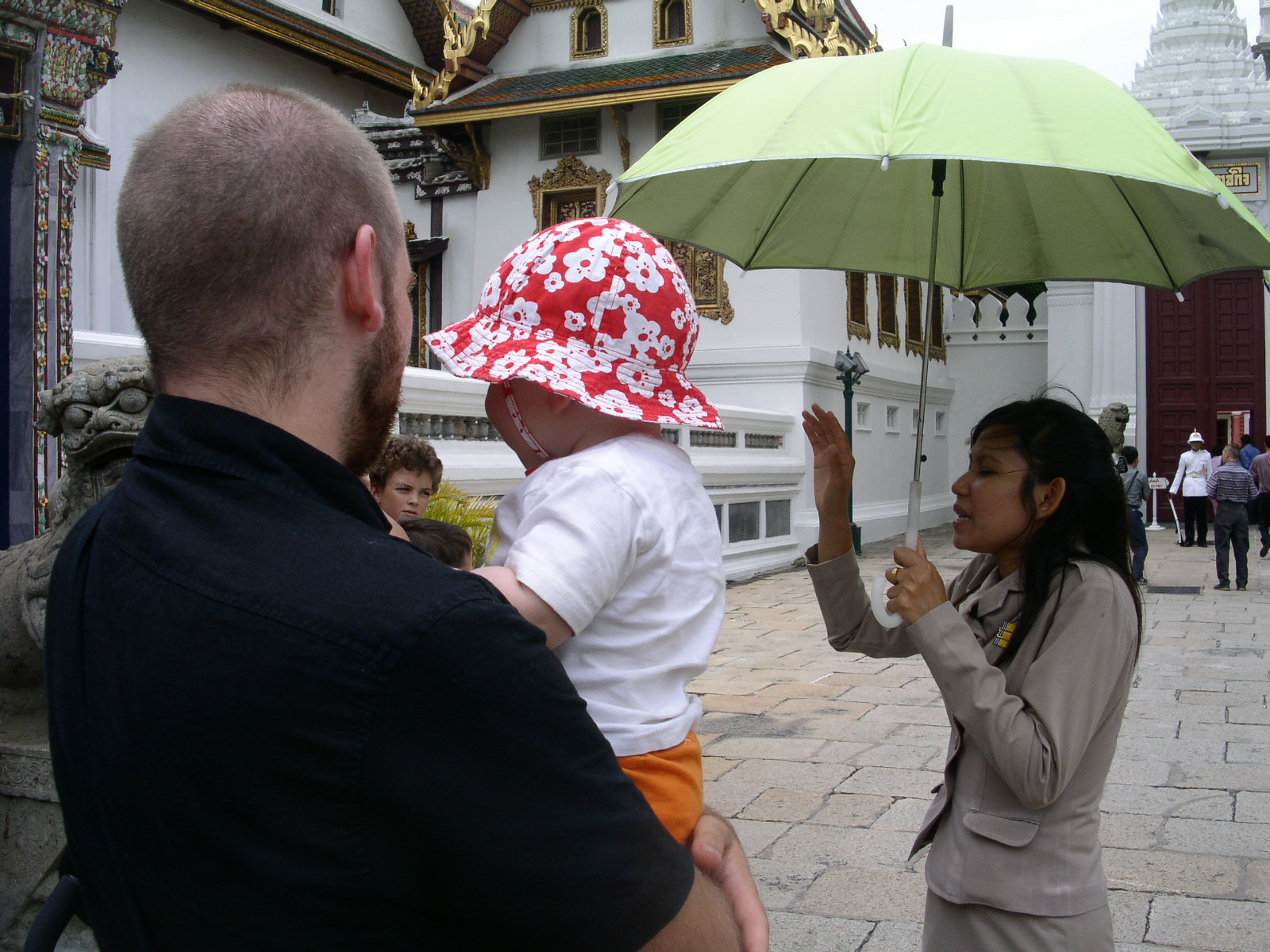
For several reasons I’ve been thinking a lot about my role as a supervisor of PhD students lately. I currently supervise 2 PhD students, and most of what I do as a supervisor is based on experience of having been supervised myself as a PhD student. Since I teach a lot at our master programme in health informatics, I’ve studied pedagogy (as has been reflected in this blog), and I supervise many master students through their thesis work. The supervising of PhD students do however have a very unique context and the relationship between the supervisor and the student is also very special (whether good or bad). One of my PhD students just yesterday had a paper accepted after only minor revisions and the pride I felt was almost ridiculous. Anyway, my own thoughts about supervision led me to take a course in “pedagogy for doctoral supervisors” – and one of my assignments was to choose a picture that I felt represented me as a supervisor. After some soul searching (and searching through photo albums) I picked this one.

MINOLTA DIGITAL CAMERA

I chose this picture of a friendly and knowledgeable guide as my view of myself as a PhD supervisor. I think supervising PhD students is very much about guiding them through a new world, and a new culture. In order to feel safe when you enter this world, you have to be able to trust your guide, both when it comes to the knowledge they have but also that they will tell you about unspoken rules and regulations in this new setting. Being this guide requires structure (meeting places, deadlines), but also allowing freedom to explore (everyone needs some time to enjoy the grand palace on their own, right?). I may not always be able to answer all questions asked, but I’ve been down this road before and I can help you find the answers on your own. I hope to make the experience a pleasant and inspiring one, even when the weather is really a little too hot, and the 9-monthold baby have lost interest a long time ago… but I am also aware that the experience is ultimately yours and all tourists/PhD students have their own preferences, personalities and background knowledge.

Finally, when we rush to the tour bus to get back to the hotel, and I’m pushing you along although you don’t really feel ready to leave yet – I hope you will not only be annoyed with me, but think back on the time we spent together with joy!

Posted in Teaching | Tagged | 1 Comment

My very first book chapter!

http://www.igi-global.com/book/achieving-effective-integrated-care-beyond/102181#table-of-contents

Soon, soon, my very first book chapter will be published! It’s called “Informatics and Socio-technical Challenges when Designing Solutions for Integrated eCare” and I’ve co-authored it with Sabine Koch and Isabella Scandurra. Can’t wait to see it in print!

Posted in Publications | Tagged , , | Leave a comment

Final reflections on Flexible, Distance and Online Learning

As you may have noticed, during the fall I participated in  the online course FDOL (flexible, distance and online learning), and now it is time to make my final reflections on what I have learned during the course.

What I’ve learned about flexible, distance and online learning

The FDOL course in itself was a great learning experience, not only by providing theoretical knowledge and interesting discussions on what flexible and online learning is, but also by giving practical experience of participating in such a course. It was inspiring, challenging and gave me lots of ideas for how to incorporate online tools in my own teaching. But, to keep things short in this final reflection, I choose to focus on the three key concepts in the course title; flexible, distance, and online learning.

Flexibility – the concept of flexibility is something we have discussed a lot during the course, and one statement that stayed with me is “Flexible for whom?”. Flexibility for students may very well lead to more work for both teachers and administrators, and while flexibility is often thought of as a good thing, too much flexibility can also leave students without the support needed to reach their intended learning outcomes. A balance between self-directed and flexible learning and structure and support is needed.

Distance – the distance is of course one aspect of flexibility, by not having to be present in a physical location education in different forms can be accessible to a much larger group of people. Not only can the education be accessed, but as a participant you also have the opportunity to collaborate and share experiences with people from all over the world. On the other hand, the geographical distance can cause problems with respect to e.g. time differences making synchronous communication challenging.

Online – the fact that we are discussing online learning opens up to using an array of new tools for teaching and learning! In the FDOL course we have used blogs, twitter, google+ (with both groups and hangouts), diigo for curating resources and adobe connect for online seminars. Most tools where familiar to me, but the sheer amount of different platforms and means of communicating in the course felt quite overwhelming to me the first weeks. This led to many interesting discussions and thoughts about digital literacy, and what it might be like for students to be faced with many new and perhaps intimidating technical environments.

Finally, one of the key lessons I’ve learned during the FDOL course has to do with the importance of supporting students while at the same time trusting them to be independent and self-guided learners.

What I learned from working in an online PBL group

PBL (problem based learning) was quite new for me, and it took a bit getting used to. I have often worked with group assignments during my own education, and am fond of using group work in my own teaching – but of a much more traditional kind. Here we were given quite free hands – we got to set our own learning outcomes for each unit, and choose which scenarios to work with, and how to present our results. But basically, it was all about collaborative learning [1]- and after a while we managed! I quite like the scale suggested by Siemens to discuss collaborative learning, describing how learner-learner interactions in an e-learning course can be viewed as a four stage continuum [2]:

  1. Communication (people talking, discussing)
  2. Collaboration (sharing ideas and working together, occasionally sharing resources, in a loose environment)
  3. Cooperation (doing things together, but each with his or her own purpose)
  4. Community (striving for a common purpose)

I believe that during the FDOL-course I experienced at least the first three stages. Communication took place e.g. in the online seminars where participants from the entire course participated and synchronously discussed the units topic. We also did some sharing of resources and ideas in google+, bordering on collaboration. In the PBL group we definitely collaborated, but it took a while for us to reach cooperation. At first we had weekly hangouts where we discussed what to do and then attempted to work independently and have asynchronous discussions in our google+ group. It didn’t work very well. Working together using the google hangouts turned out to be very efficient in the latter part of the course. We had our shared documents on google docs and all worked together on them while we simultaneously discussed in the hangout. Between hangouts we all worked separately, but the main task of collaborative learning was done synchronously in the hangouts. I have previous experience of similar work when writing articles together with other researchers spread out across Sweden. I would definitely recommend this way of working to my future students, at times its even more efficient than meeting f-2-f since everyone can work on the same document at the same time.In the end, I think the three of us left in the group actually felt a sense of community too.

What I plan to change in my own teaching

As I’ve described in earlier blog posts, I plan to extend my teaching practice by including blogging as a tool for students to reflect and communicate with experts outside the teaching environment, and potentially also explore flipping my classroom to some extent in order to make better use of the face-to-face teaching-learning activities.

In the FDOL course, we have discussed open learning a lot – how can we open up our practice? I find the thought of open education very appealing, and I believe there is a great demand for the type of courses we teach in health informatics masters program. Hilton et al showed that using current technology it is quite easy to make a course openly accessible to outside students [3], and I believe that I could easily make most of my course materials openly available online (since most of it is already published on our online learning platform). Yet, considering my experiences with the FDOL course, I question somewhat the benefit to learners in only accessing these materials. The main learning activities that take place in my courses are of a collaborative nature, and in order to organize functioning groups I still believe some direction and facilitation from teachers is required. Simpson also focus on motivation as a key aspect of online learning [4], and I believe that both peer feedback and meaningful activities can increase student motivation – but it requires active interaction with teachers/facilitators as well. In addition, opening up my courses requires much more planning and organization than I currently have means to do. For now, I’ll keep my courses blended with both online and face-to-face teaching/learning activities, introducing more and more online tools and open practices such as blogging. And perhaps it will be possible to offer some of the courses as fully online alternatives in the future – I’ll keep you posted on what happens!

[1] Dillenbourg P. (1999) What do you mean by collaborative learning?. In P. Dillenbourg (Ed) Collaborative-learning: Cognitive and Computational Approaches. (pp.1-19). Oxford: Elsevier

[2] Siemens, G. (2002).  Interaction. E-Learning Course. October 8, 2002. http://www.elearnspace.org/Articles/Interaction.htm

[3] John L. Hilton III, Charles Graham, Peter Rich and David Wiley, Using Online Technologies to Extend a Classroom to Learners at a Distance

[4] Ormond Simpson. Motivating learners in open and distance learning: Do we need a theory of  learner support?

Posted in Teaching & learning reflections | Tagged , , , | 2 Comments