Flexibility

It will be a short blog post today – gotta have those days too… did I complain the other day about the never ending work of academics, grading exams over the weekend and reviewing papers late at night? Well, today I celebrate the flexibility of #academiclife and read reports in the spring sun, with my coffee. This means my daughter come straight home from school at 2 pm, and we can cook dinner together without stress. Each coin has two sides, so does the flexibility of academic life.

[post 8 in the #blogg100 challenge]

Posted in #blogg100 | Tagged , | 5 Comments

How much is a conference contribution worth?

I’m reviewing conference submissions right now for the Scandinavian Conference on Health Informatics 2016 (deadline today… I know…), and I thought I’d take the opportunity to reflect on a very special topic that haunts Health Informatics researchers. If you’re a researcher in Computer Science or Information Systems research – writing conference papers is very often the main channel for publishing your work. There is a rigorous review process and acceptance to the main conferences can be quite challenging. In medical research, however, writing a contribution to a conference is also always in the form of abstracts. Peer reviewed too, but often one page or less of text. After you’ve presented at the conference (or in parallel) you submit your full paper to a scientific journal – and that’s where you get your credit from.

Now, health informatics (or medical informatics if you prefer that term) is a very interdisciplinary field bringing work practices and traditions from many areas of research, including computer science, social sciences and medicine. When it comes to conferences in medical informatics, most use a computer science approach, i.e. we submit full papers that undergo proper peer review (hence my work today). What’s the problem? you might think. Well, the problem occurs when applying for funding, job positions or similar when your work is reviewed by researchers from the medical field. When they see “in conference proceeding” they automatically think “abstract” – which rapidly reduces your research productivity massively. The same goes for bibliometric measures that rarely takes conference contributions into account. And if you happen to work at a purely medical university, such as Karolinska Institutet, you have your work cut out for you in convincing review boards that your conference papers count for more than just abstracts. I’m curious to know whether other researchers in interdisciplinary fields have similar problems… please leave a comment if you have experiences to share!

Soon I will be applying to become an associate professor here at KI – and I hope that the interdisciplinary researchers before me have paved the way for my application. Wish me luck!

[post 7 in the #blogg100 challenge]

Posted in Conference reflections, Peer review | Tagged , | Leave a comment

In celebration of academic friendships

This morning I was reached by the best news – my very good friend Isabella just had a daughter! I’m thrilled and so happy I can barely keep myself from jumping on a plane and fly across Sweden to see her.

010

Me and Isabella in Malaga 2002

So this blog post is a celebration of our friendship – which is of a special, beautiful kind. We’re not “just” friends, we’ve also grown up as academics together. Isabella and I first met while studying software engineering in Uppsala in 1997 and we became good friends from the start. We collaborated on assignments and thesis projects and Isabella’s never ending energy and motivation complemented my reflective and analytic nature – we were a perfect team.

After our studies we both stayed an worked in different research projects at the university, and managed to prepare an application for research funding together that was granted (we didn’t realize then how lucky we were!) and enabled us to fund our PhD studies, and we worked in parallel on our respective PhD thesis projects. Going through this together has created a special bond. We’ve been through it together, both the fun stuff and the hard parts. We’ve travelled the world, to countless conferences and meetings. We’ve both met our husbands, fallen in love, been to each others weddings and birthday parties and when I had my daughter 9 years ago, Isabella was the first person to visit us at the hospital.

MINOLTA DIGITAL CAMERA

Isabella meets my daugther Ester for the first time 2006


MINOLTA DIGITAL CAMERA

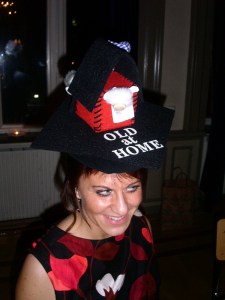
At Isabella’s dissertation party 2008


IsaDennisBröllop 2009-09-19 110

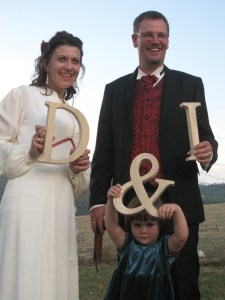
Isabella & Dennis wedding (my daughter holding the &) 2009


Being in the same field of research means we still collaborate on research projects and applications, but we also compete from time to time, and admittedly I sometimes compare myself to her successes and feel just a little jealous… but it’s always overcome by a huge happiness and pride – that’s MY Isabella! And I think we will always have a special friendship. We no longer see each other on a daily basis since we live so far apart – but we meet at conferences around the world and visit each other as often as we can. So, in this post I want to celebrate our friendship and the arrival of Isabella’s daughter! All my best wishes to the whole family.

I also want to recommend to all of you out there going through your PhD studies. Cherish the friendships that are created during this very special, wonderful and demanding – even challenging – time in your lives. The people you are surrounded by now may not just be your future colleagues and collaborators – they’re likely friends for life!

IMG_6173

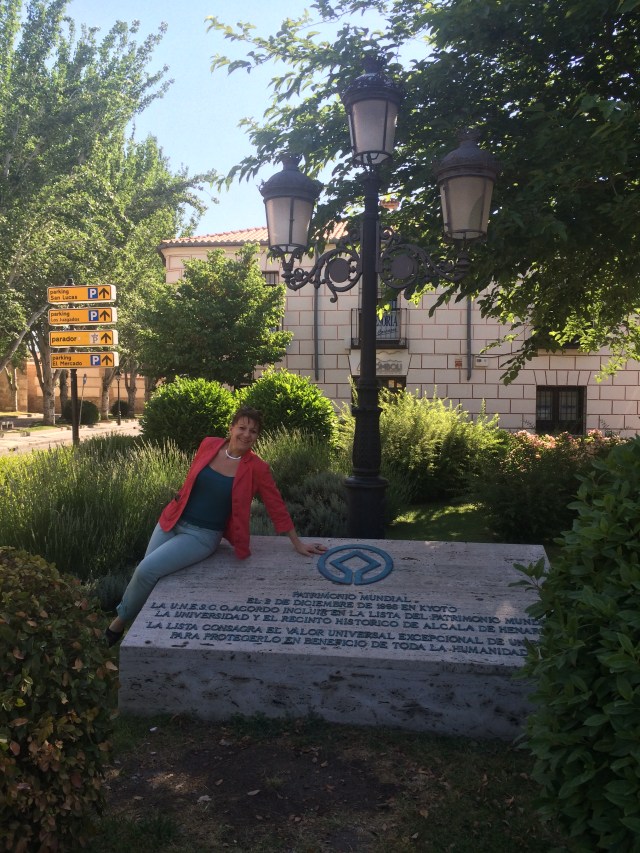
Hunting world heritage sites 2015 (I’ll tell you more about that some other time…)

[post 6 in the #blogg100 challenge]

Posted in #blogg100 | Tagged , | 2 Comments

How professors spend their time

Today it’s saturday. What I’m doing? Playing Wii U with the kids? NO. Taking a long walk or going to the gym? NO. Curled up on the sofa with the next book for my book club? NO.

I’m grading exams. I have 20 written exams to grade, 5 revised assignments that need to be re-assessed and 4 papers to review for a conference. Needless to say they should all be done by Monday. Oh, and I also need to upload feedback on the 21 case reports I should have uploaded yesterday.

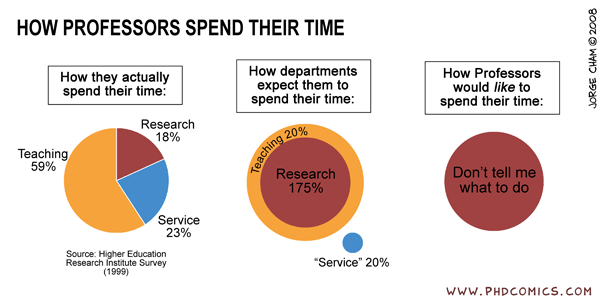
It makes me think of this chart by Jorge Cham from PhD comics – look it up! It’s hilarious – and strangely therapeutic.

phd082508s

Jorge Cham / phdcomics.com
From “Piled Higher and Deeper (PhD),” the higher ed comic strip from Jorge Cham.

Admittedly, I have about 40% teaching in my current position, but there are days when it feels a bit overwhelming. Especially when the ongoing research projects also have deadlines and meetings and results to produce that cannot be postponed.

On the other hand – I wouldn’t want to do without it. The teaching  I mean. When I first started, I was terrified and (and admittedly I hated it), but I’ve really come to enjoy it over the years. The planning, preparations and interaction with the students – it’s great. I learn as much as they do! I just wish there where a few more hours to each day – so I wouldn’t have to look forward to the weekends as a “time to catch up”. But obviously I have time to blog about it – so how bad can it be.

[post 5 in the #blogg100 challenge]

Posted in #blogg100, Teaching | Tagged , , | Leave a comment

Vitalis 2016

Will you be attending Vitalis this year? If you’re not familiar with the Vitalis conference, it’s one of the main meeting points for everyone working with health informatics or eHealth in Sweden. It’s held in Gothenburg every year in April, and this year it’s 5-7 April. Last year I was just there one day – it’s actually possible to take the train early in the morning and back again in the evening, but you get a looong day. This year, I’ll spend all three days there, and I’m really looking forward to it. Since it’s also during the #blogg100 challenge, you will certainly get some updates!

Among other things, I will be presenting some of the results and experiences from the IntegrIT project I have been working with the past 2 years. Looking forward to many interesting discussions on how we can make the lifes of clinical researchers and study participants easier!

Vitalis IntegrIT

[post 4 in the #blogg100 challenge]

Posted in #blogg100, Conference reflections, Health Informatics conferences | Tagged , | Leave a comment

Bad review? Don’t give up!

Peer review of scientific publications is an essential part of any academics life. It is the process in which (after having worked for months (or years) to plan a study, collect data, analyse it and write an article/paper) you submit your work to a scientific journal where it is reviewed by 2-3 reviewers who are experts in your area of research (ideally). In the best scenario, they love what you’ve written and accept it for publication without revision. This is cause for champagne! More often, they have comments and you can be asked to re-submit your paper with minor or major revisions, and if you’ve done what they asked they will likely accept it for publication. But sometimes, they simply hate it – and receiving a bad review can be quite devastating – especially if you are early in your research career.

A recent “review experience” made me think about the following twitter conversation that really resonated with me. Two very experienced researchers (if you’re not following them on twitter already – DO SO!) reflect on the very negative impact a bad review can have.

And if you’ve been in research a while you are bound to have experienced (at least) one of those reviews, the ones that make you feel absolutely worthless, make you question your ability as a researcher completely, and might even make you give up. If not on research alltogether at least on the paper that was trashed. But what are the consequences? All the hours of research, planning, data collection, analyzing and writing – wasted if the end result never reaches outside your desktop.

Last year, a paper I was co-author on with a junior colleague was rejected (after almost a year of waiting!) with quite a harsh review accompanying it. We didn’t give up of course, but used some of the more constructive feedback to improve the paper and considered why the reviewers failed to see the importance of the study. After some revisions and clarifications, we submitted the paper to a new journal, with higher impact factor and with a focus more adapted to our research. Only a few weeks later, we received reviews that were much more positive. Still some revisions to do before acceptance, but overall very encouraging and clearly acknowledging the importance of the results.

My main point here is – don’t give up! When you’ve gotten as far as submitting a paper for publication, don’t let a harsh review discourage you. Let it rest a few days, shake it off, learn what you can learn and resubmit!

And don’t think you’re the only one experiencing this – it’s no coincidence that 10 advice for peer reviewers from Elsevier include “Be professional”, “Be pleasant”, “Be helpful”, and “Be empathetic”.

[post 3 in the #blogg100 challenge]

Posted in #blogg100, Peer review | Tagged , | Leave a comment

MedTech Magazine’s list of most powerful

Once again, I’m proud to announce that our Health Informatics Centre  is represented on the list of most powerful in Swedish MedTech presented by MedTech Magazine. Last year, my colleague and PhD student Sara Riggare was in first place, this year she’s in 6th place. Very proud of the excellent work she’s doing, and I will certainly relate to more of the research we’re doing together in this blog in the future.  For now – enjoy the motivation (and lovely picture of Sara), and if you want to find out more about this amazing person – visit her own blog!

Sara Maktlistan

[post 2 in the #blogg100 challenge]

Posted in #blogg100, Uncategorized | Tagged , | Leave a comment